From WSJ: As an alternative to meetings, buff bosses are inviting their employees to exercise and work out (video):
Some prospective employers ask baffled applicants to take jogs, lift weights or do sit-ups; ‘I thought I was going to pass out’, says one job applicant. Read more in WSJ here: Thanks for Your Job Application—Shall We Begin at the Squat Rack? http://buff.ly/2qNEG24
Showing posts with label WSJ. Show all posts
Showing posts with label WSJ. Show all posts
Friday, 2 June 2017

Friday, 6 January 2017
Gadgets Galore - Best of CES 2017
From WSJ: As the tech world reveals the products that will impact the year ahead, Personal Tech columnists Geoffrey A. Fowler and Joanna Stern hunt for the most exciting and unusual, from AR glasses to breast pumps (video is below):
http://on.wsj.com/2j9crYt
http://on.wsj.com/2j9crYt
Monday, 31 October 2016
"Bottle-flipping" is the latest fad, see why schools are banning it - WSJ video
From WSJ: Bottle-flipping has become a worldwide phenomenon. But some schools are trying to ban the flippers:
Monday, 29 August 2016
The Science of Doping: Gaming Hormones, Asthma Drugs, and More
From WSJ: Doctors often prescribe tamoxifen to breast cancer patients to keep their tumors from growing. But the drug is also used by doping athletes looking to get ahead of the competition. How does it give them an edge, biologically? Watch the video below:
Earlier this year, British cyclist Simon Yates was caught up in a doping controversy related to terbutaline, a common asthma medication. Athletes can take the inhaled version if they get a doctor's note. But current testing methods can't differentiate between this and other banned versions. Watch the video below:
Related:
The Science of Doping: How Testosterone-Boosting Drugs Work http://buff.ly/2bYWulU
Earlier this year, British cyclist Simon Yates was caught up in a doping controversy related to terbutaline, a common asthma medication. Athletes can take the inhaled version if they get a doctor's note. But current testing methods can't differentiate between this and other banned versions. Watch the video below:
Related:
The Science of Doping: How Testosterone-Boosting Drugs Work http://buff.ly/2bYWulU
Thursday, 13 November 2014
How to Teach Teens to Drive Safely - WSJ video
Along with parking and steering, parents also need to teach teenagers how to spot crash hazards. WSJ's Sue Shellenbarger and Tanya Rivero discuss some tips.
Monday, 6 October 2014
What Causes Bad Breath (Halitosis)?
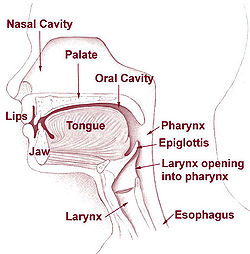 Halitosis is a generic term used to describe unpleasant odor emanating from the mouth air and breath, independent of the source where the odor substances originate. It affects between 50 and 65% of the population, but despite its frequency, this problem is often unaccepted and declared as taboo.
 90% of patients suffering from halitosis have oral causes. A small, but important percentage, of oral malodor cases have an extra-oral etiology, very often falling into the category of "blood-borne halitosis".
Several systemic diseases have been found to provoke malodor or to be a cofactor; bad breath may be an early sign of a serious local or systemic condition.
A psychogenic halitosis also exists including the variant "pseudo-halitosis", when the oral malodor does not exist, but the patient believes he or she is suffering severely from it, and the halitophobia, when, instead, there is an exaggerated fear of having halitosis.
It is important to determine quickly whether the odor comes from an oral cause or not: if so, it requires referral to a dentist; if not (extra-oral origin alone or combined), its management requires the treatment of the underlying causes. Extra-oral disorders can be the cause in up to 15% of cases.
From The WSJ: What really causes bad breath, what can you do to prevent it and can you tell if you have it? WSJ's Heidi Mitchell joins Lunch Break with Tanya Rivero with the answers.
References:
Oral malodour (halitosis) - BMJ 2006 http://1.usa.gov/1sXOO8m
Halitosis: could it be more than mere bad breath? [Intern Emerg Med. 2011] - PubMed - NCBI http://1.usa.gov/1sXOR3U
Image source: Head and neck. Wikipedia, public domain.

Subscribe to:
Posts (Atom)